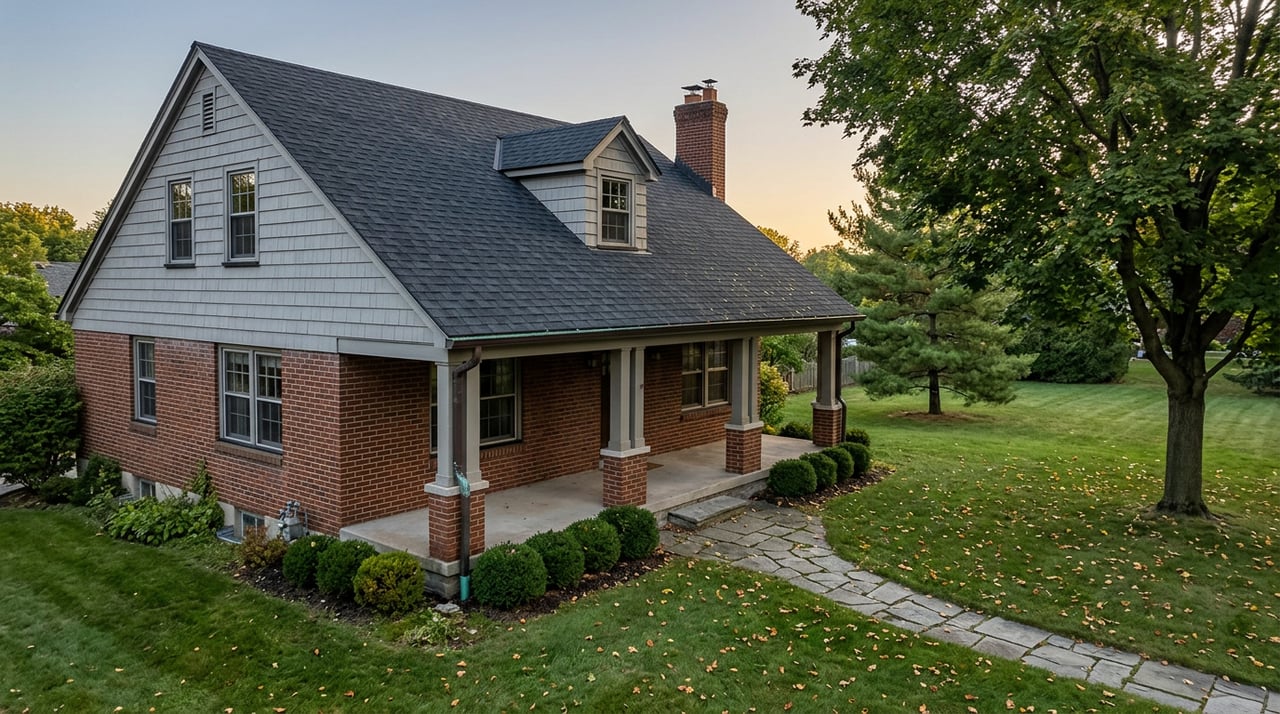
On January 19, 2026, the Town of Oakville added a property called the Hillside Farmhouse at 376 Chartwell Road to its official heritage register. About fifteen months earlier, in October 2024, a property known as The Woodlands on Bronte Road went through the same process. Two houses, two separate council decisions, both part of a rhythm that has been running quietly in the background of Oakville's east-end real estate market for the better part of four years.
That rhythm is about to hit a hard stop. Every property currently sitting on Oakville's heritage register as "Listed" but not "Designated" has to be sorted into one of two permanent categories by January 1, 2027. Either the Town formally designates it, locking a set of exterior protections onto the title, or the property drops off the register entirely and loses that status for good. There is no third option, and there is no extension left to give.
If you're comparing East Oakville's historic core against a newer subdivision, this deadline is the detail the median price won't show you. It changes what you're actually buying, and it changes it on a clock that runs independently of your closing date.
Why the clock exists at all
The deadline traces back to Ontario's Bill 23, the More Homes Built Faster Act, passed in October 2022. Among other changes, it put a two-year limit on how long a property could sit on a municipal heritage register as merely "Listed," meaning identified as having cultural heritage value but never formally designated under the Ontario Heritage Act. Miss the window, and the listing itself expires.
Oakville responded in early 2023 by launching a Heritage Designation Project aimed at working through roughly 80 priority listed properties before they aged out. The Town got through most of that list in 2023 and 2024. Then, in 2024, the province passed Bill 200, the Homeowner Protection Act, which pushed the deadline from January 1, 2025 to January 1, 2027. That two-year reprieve is the window we're in right now, and the Town has said it will keep designating additional properties, including some it owns itself, through 2025 and 2026 to beat the new date.
Three of Oakville's four Heritage Conservation Districts sit inside East Oakville's historic core along the lake and Sixteen Mile Creek: Old Oakville, established in 1981 as the town's first designated district and one of the earliest in Ontario, First and Second Street, designated in 1989 around the area first surveyed in 1855, and Trafalgar Road, added in 1994 around homes largely built prior to 1860 near George's Square. Between them and the town's individually designated properties, Oakville's heritage register runs to more than 900 addresses, with 154 designated individually and 418 more spread across its four districts, Old Oakville alone accounting for 124 of those.
That is not a small footprint. It means a meaningful share of what comes up for sale in East Oakville's oldest streets over the next several months is being sorted, right now, into one of two futures.
The friction buyers don't see on the listing sheet
Here is the part that matters for a transaction, not just a history lesson. Heritage designations in Oakville move through the Heritage Oakville Advisory Committee, which meets monthly, then goes to council for a vote. That calendar runs on its own schedule. It has nothing to do with when a house gets listed, when an offer gets accepted, or when a deal is set to close.
Which means a property that's marketed today as "Listed heritage, exterior character subject to future review" could receive a formal designation notice while it's under contract. The buyer who wrote an offer expecting some flexibility on a future porch rebuild or a window swap could find, by closing day, that those same changes now require a Heritage Permit and sign-off from the town's Heritage Planning staff.
It also cuts the other way. A property that's been sitting as "Listed" for years, with buyers assuming it carries the same restrictions as its fully designated neighbors, could simply age off the register on January 1, 2027, taking those informal protections with it. In the Ontario Heritage Act's own terms, a merely Listed property only requires 60 days' notice before demolition. A Designated one is a different matter entirely, protected on title indefinitely.
Most buyers check the MLS sheet. Very few check the Heritage Oakville Advisory Committee's meeting agenda. Between now and the end of 2026, that second document matters more than usual.
What each status actually means for the house
The three outcomes aren't equally restrictive, and the differences are easy to get backwards.
| Status | Exterior changes | Interior renovation | Buyer pool effect | Grant eligibility |
|---|---|---|---|---|
| Designated (Part IV or within an HCD) | Requires a Heritage Permit; changes must be "sympathetic" to original materials and massing | Generally unrestricted unless interior is separately protected | Narrower; some buyers avoid the process | Eligible for the Town's Heritage Grant Program |
| Listed, not yet designated | No formal permit requirement yet, but demolition needs 60 days' notice | Unrestricted | Ambiguous; status could change before or after closing | Not eligible until formally designated |
| Removed from register (missed deadline) | No heritage restrictions | Unrestricted | Widest buyer pool | Not applicable |
The detail worth sitting with is the middle row of the interior column. In every one of these categories, interior renovation is largely untouched. Heritage protection in Oakville is almost entirely about what the street sees, not what happens inside the walls. A buyer ruling out a designated Old Oakville property because they assume the whole house is frozen in time is often working from the wrong assumption. The kitchen, the basement, the layout, none of that typically needs a permit. It's the front-facing roofline, the sash windows, the porch, and the setback that come under review.
That distinction is part of why designated heritage homes in Oakville have historically held their value well. The protection locks in the character of the block, not the buyer's ability to live in the house the way they want to inside it.
The costs that come with the label
None of this is free, and it's worth pricing in before writing an offer on anything currently sitting as Listed or already Designated in Old Oakville, First and Second Street, or Trafalgar Road.
Exterior work on a designated property typically has to match original materials and profiles. Replacing a drafty window usually means restoring or custom-replicating a wood sash rather than dropping in a vinyl unit, and that kind of specialized work commonly runs renovation budgets 20 to 30 percent above a standard build in the same price range.
Insurance is the other place this shows up unexpectedly. Homes built before 1940, which describes a large share of the stock in these districts, often carry knob-and-tube wiring or galvanized plumbing that standard insurers won't cover without upgrades. Replacing that wiring alone can run $15,000 to $30,000 before a policy is bound, and it's the kind of cost that surfaces during a financing condition, not during the initial walkthrough.
None of this should scare a buyer off a genuinely well-located property. It should just be priced into the offer, and timed against the designation calendar rather than assumed away.
A short timeline, for reference
- October 2022 — Ontario passes Bill 23, capping how long a property can remain "Listed" without formal designation.
- Early 2023 — Oakville launches its Heritage Designation Project, prioritizing roughly 80 listed properties.
- 2023 to 2024 — The majority of those priority designations are completed.
- 2024 — Ontario passes Bill 200, extending the deadline from January 1, 2025 to January 1, 2027.
- 2025 to 2026 — The Town continues designating remaining listed properties, including some it owns, ahead of the new date.
- January 1, 2027 — Any property still Listed but not Designated comes off the register.
We're currently in step five, with roughly four months left before the deadline arrives.
Frequently asked questions
How do I check whether a specific East Oakville address is Listed, Designated, or neither? The Town maintains a public Heritage Register mapping tool and a separate open data set of the full register, both searchable by address.
Does heritage designation stop me from renovating the interior? In almost every case, no. Designation in Oakville is built around exterior attributes, facades, rooflines, windows, porches. Interior work, including kitchens and basements, typically doesn't require a heritage permit unless a specific interior feature was named in that property's designation by-law.
If a property is only Listed right now, will it definitely be designated before 2027? Not necessarily. The Town has been working through its priority list steadily, but final decisions run through committee review and a council vote for each address. Some listed properties may age off the register instead of being designated, particularly ones the Town hasn't prioritized as clearly meeting the Ontario Heritage Act's criteria.
If you're weighing a character home in Old Oakville, First and Second Street, or Trafalgar Road against something newer, the smartest move right now is checking where a specific address sits in this process before you write an offer, not after. Heidi Lobel has spent more than 25 years reading exactly this kind of local detail into a negotiation. Get your free home valuation and a straight read on what a property's heritage status will mean for you, before the deadline decides it for you.