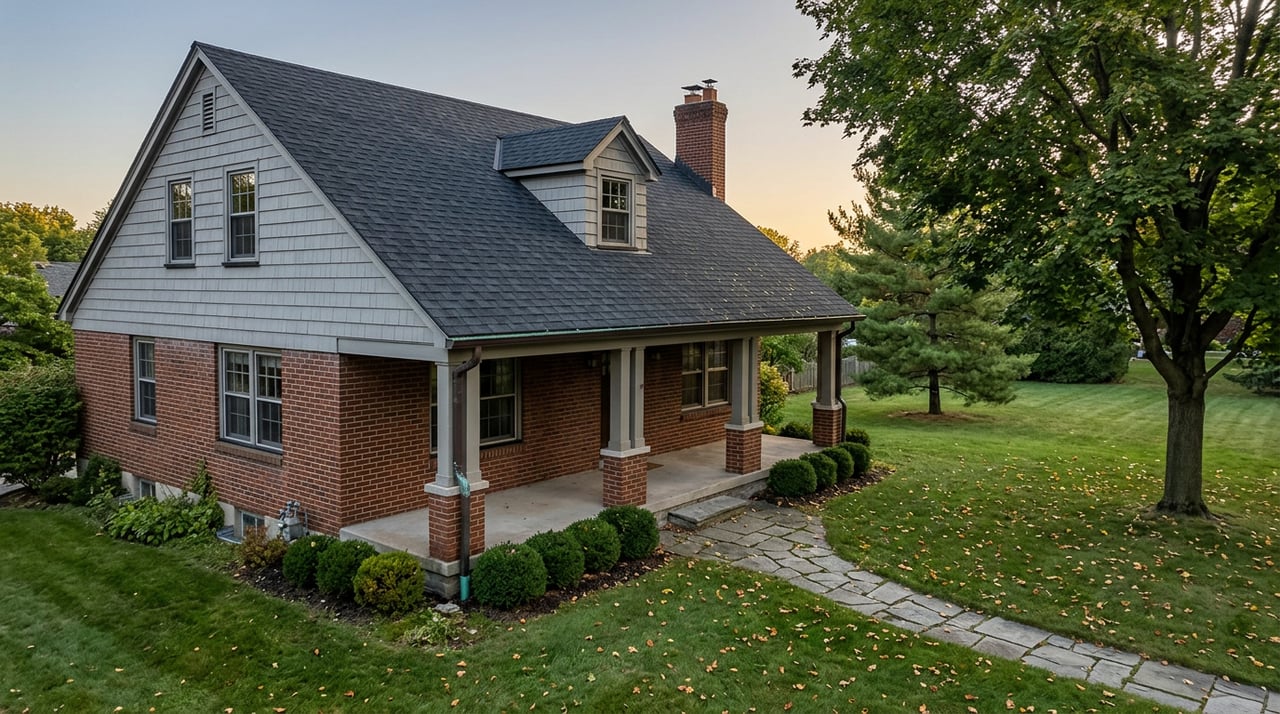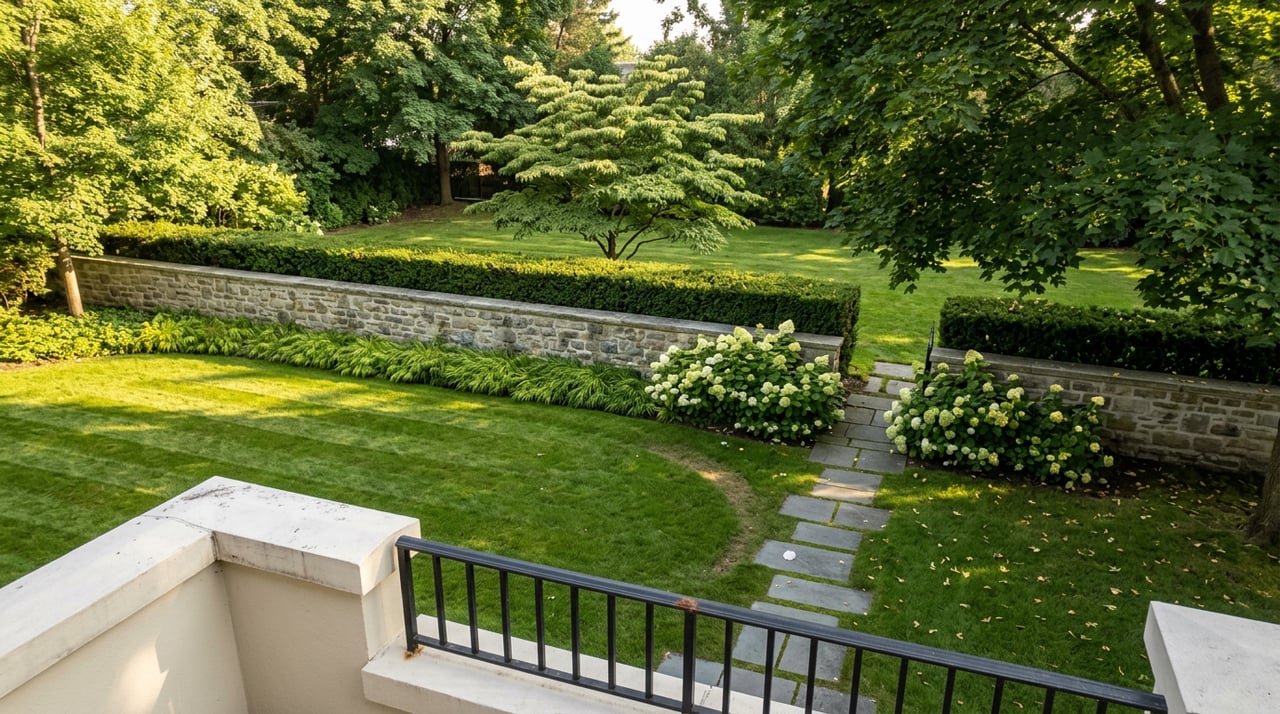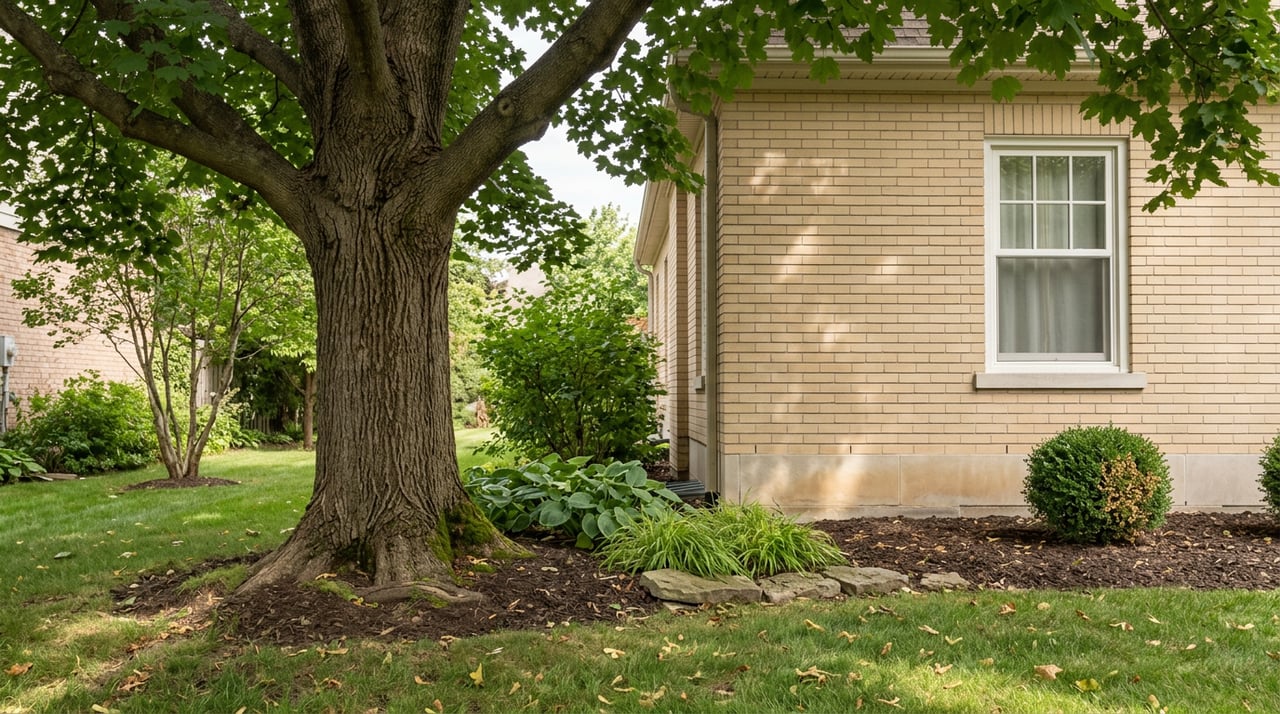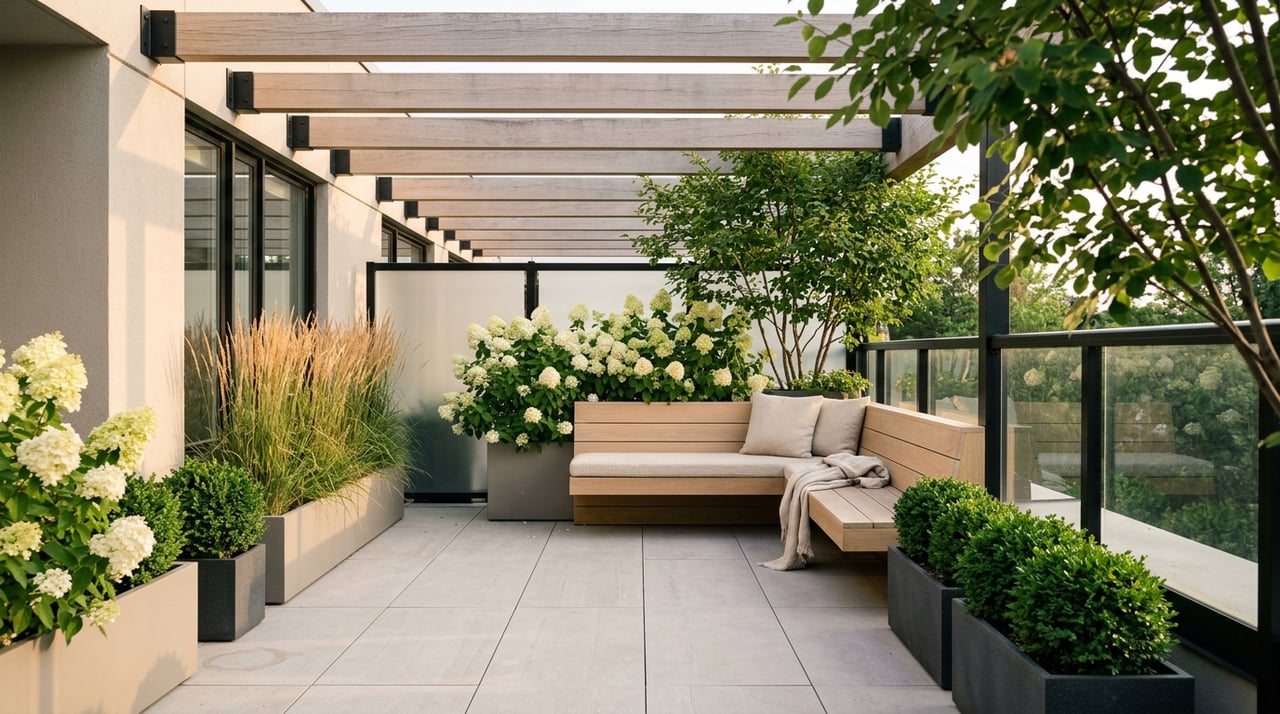
This spring, sellers across Burlington's most established lakeside streets kept running into the same wall. List a Shoreacres or Roseland detached home at last year's number, and showings slow to a trickle by week three. Reprice to match where the benchmark has actually settled, and the same house often moves within weeks, at a healthy percentage of ask. That gap between the price a seller expects and the price the market will actually clear is the real story in Burlington right now, and it has almost nothing to do with the single "average home price" figure that surfaces whenever someone searches the city.
Burlington's year-to-date average sale price through May 2026 sat at $1,087,165, down roughly 1.4 percent from the same point in 2025. Read on its own, that number suggests a city cooling evenly across the board. It isn't. That average is built from at least three Burlington markets moving in different directions at different speeds, and knowing which one you're actually shopping or selling in changes the math completely.
One City, Three Markets
Burlington doesn't have a housing market. It has three, layered on top of each other and reported as one number.
| Segment | Where | What's happening |
|---|---|---|
| Lakeside detached | Shoreacres, Roseland | Benchmark prices softened 2 to 3 percent this year after several years of steady gains |
| Inland family freehold | Alton, Tyandaga, Millcroft, the Orchards | Demand holding firm, priced as the value alternative to comparable Oakville communities |
| Condos and townhomes | Halton-wide, including the corridor near Appleby GO | Average price down close to 10 percent year over year, even as sales volume jumped over 30 percent |
Each of those movements has a different cause, and none of them is captured by the citywide average. A buyer comparing neighborhoods off that one number alone will misread every segment on the list.
Why Shoreacres and Roseland Are Cooling, and Why That Isn't the Same as Falling
Benchmark detached home prices in Burlington's lakeside enclaves softened somewhere in the 2 to 3 percent range earlier this year. The MLS Home Price Index tracks a "benchmark home," a property with typical attributes for its neighborhood, precisely so a number like this isn't distorted by one unusually large or small sale. That distinction matters here, because a 2 to 3 percent benchmark dip in a $2 million-plus enclave is a different animal than the same dip in a starter neighborhood.
It's also not one dip. Shoreacres and Roseland get grouped together in most spring commentary as Burlington's "luxury lakeside enclaves," but by mid-summer 2026 they were behaving nothing alike. MLS-based figures from that period show Shoreacres ranking second among Burlington's twenty tracked neighborhoods, with a 96.6 percent sale-to-list ratio, 35 percent of homes selling in under 10 days, and a quarter selling above asking. Roseland, grouped with it in the same spring narrative, ranked 17th of 20, with homes averaging 37 days on market.
Part of that split likely comes down to what "lakeside" actually means block by block. Shoreacres inventory includes homes fronting directly onto Lakeshore Road, with active listings this year priced as high as $3,995,000 for a five-bedroom on that stretch. Roseland's homes sit a few streets north, close to the water but not on it. Same neighborhood label, different proximity to the one feature that commands the real premium.
For a seller, the practical read is this: the softening headline is real, but it applies unevenly even within the enclave you're comparing yourself to. Pricing off last year's Shoreacres comp when your home is actually a Roseland property a few streets back is the exact mismatch causing those slow first three weeks.
The Value Play Inland: Alton, Tyandaga, Millcroft, and the Orchards
While the lakeside corridor recalibrates, Burlington's inland family neighborhoods are doing something closer to holding their ground. Freehold demand in pockets like the Orchards and Millcroft has stayed steady enough this year to sit in balanced territory, with absorption rates in the low-to-mid 40 percent range, meaning homes are moving at a reasonable pace without the runaway bidding of 2022.
The reason has less to do with those neighborhoods themselves and more to do with what they cost relative to the next city over. Halton Region's single-family average price hit $1,556,923 in May 2026, up 5.4 percent year over year, a number driven heavily by Oakville's established communities. Burlington's inland pockets offer a comparable commute and comparable school access at a meaningfully lower entry point, which is exactly why Alton, Tyandaga, and Millcroft have seen steady demand as prices there continue to run lower than similar Oakville properties.
That value gap shows up most clearly along the corridor near Appleby GO. Buyers priced out of Oakville's freehold market, but still wanting a walkable stretch to a train platform, have been landing in this part of Burlington specifically because it delivers that access without Oakville's price tag.
The same GO corridor that commands a premium in Oakville is, a few kilometers west, the exact reason Alton and Tyandaga are holding steady. Buyers are paying for proximity to the train, not for a specific postal code.
The Condo Paradox: Falling Price, Rising Sales
The most misleading number in the whole picture is the condo and townhouse segment. Across Halton, the average price for that category came in at $804,142 in May 2026, down 9.6 percent year over year. On its own, that looks like a struggling asset class. It isn't. Sales in that same category surged 32.2 percent over the same period, while new listings in the segment fell 20.7 percent year over year.
Falling price with rising sales and shrinking supply isn't a demand problem. It's a mix problem. When fewer new units come to market, buyers compete for a smaller, often lower-priced slice of available inventory, which pulls the reported average down even as individual transactions stay competitive. The average price of what's selling changed because what's selling changed, not because any single unit is worth less than it was last year.
That paradox nests inside itself. Earlier this year, the corridor of apartment-style condos closest to downtown Burlington and its GO station actually posted a price gain near 2.5 percent, even as the broader regional average for the category was heading the other direction. Proximity to the train and to downtown amenities was enough to move one micro-market against the regional trend entirely.
What This Means If You're Choosing Where to Land
If you're shopping Burlington off the citywide average alone, you'll misread all three of these signals. You'll assume it's a soft buyer's market everywhere, which is only true in specific lakeside pockets and not at all true inland. You'll assume condos are struggling, when the segment is actually tightening under reduced supply. You'll assume lakeside living got meaningfully cheaper across the board, when Shoreacres itself is still outperforming 18 of Burlington's 20 neighborhoods on speed and price.
None of this points to a multi-year downturn. RE/MAX's own regional outlook for Hamilton-Burlington projects average residential prices rising roughly 2 percent and sales activity climbing about 3 percent heading further into the year, consistent with a pause rather than a reversal. Monthly figures reported by the REALTORS Association of Hamilton-Burlington tell the same story from month to month: this is a market recalibrating segment by segment, not one sliding uniformly downward.
Is Burlington currently a buyer's market or a seller's market? It depends which of the three segments you mean. Lakeside detached homes outside Shoreacres proper favor buyers willing to negotiate on days-on-market. Inland family freeholds remain balanced, with sellers who price accurately still moving quickly. Condos and townhomes, despite the falling average, are tightening under reduced supply, which favors sellers who understand that dynamic.
Which Burlington neighborhoods are holding value best in 2026? By mid-summer 2026, Shoreacres still ranked second of Burlington's twenty tracked neighborhoods on combined speed and price metrics. Inland pockets like Millcroft and the Orchards are holding through steady absorption rather than price appreciation, which is its own form of stability for a buyer trying to avoid a segment in flux.
Numbers like these only mean something once you know which Burlington you're actually asking about. If you're weighing a lakeside estate against an inland family freehold, or trying to figure out whether a condo's falling average price is a warning sign or an opening, that's exactly the kind of read Heidi Lobel works through with clients street by street, not city-wide. Reach out for a home valuation grounded in your specific pocket of Burlington, not the average that gets quoted about all of it.